
Resilience and the Social Brain

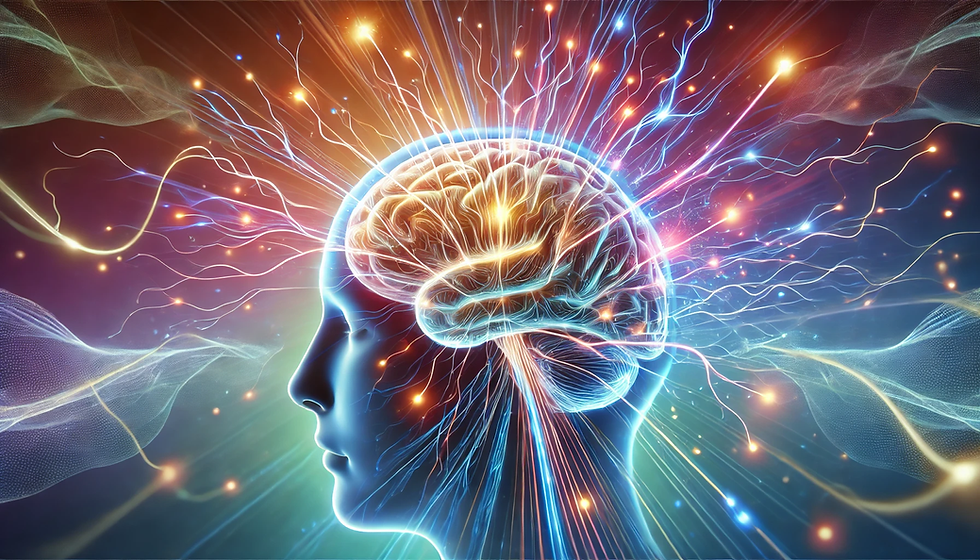
Human beings are inherently social creatures — our brains are wired for connection. Modern neuroscience shows that empathy, trust, and belonging activate many of the same brain regions that signal physical safety. When we feel connected, our nervous system interprets that bond as protection; isolation, by contrast, is processed as a potential threat. This is why loneliness can trigger the same neural alarm systems as physical pain.¹
One of the key mechanisms behind this social wiring is the mirror neuron system. Discovered in the 1990s by Giacomo Rizzolatti and colleagues at the University of Parma, these neurons fire both when we perform an action and when we observe someone else performing it.² Functionally, they allow us to “simulate” another person’s behavior and emotions internally — helping us understand others not just intellectually but viscerally. When we see someone smile, frown, or cry, our mirror neurons activate corresponding patterns in regions such as the inferior frontal gyrus, the anterior insula, and the anterior cingulate cortex — the same areas involved in our own emotional experience.³
This neural resonance is the biological foundation of empathy. It enables us to “feel with” others, to grasp their inner state, and to respond with compassion. Studies using functional MRI show that observing another person’s emotional pain activates the same pain-related brain circuits that would be active if we were suffering ourselves.⁴ This shared neural language forms the basis of social cohesion, trust, and ultimately, resilience.
In Happiness in Practice, we intentionally nurture these mechanisms through empathy circles and creative workshops. When participants share their stories and listen to others, they reactivate dormant social networks in the brain. Each act of storytelling and attentive listening stimulates mirror neuron pathways, enhancing both emotional attunement and collective belonging. Over time, these repeated exchanges can reshape neural connectivity — turning isolation into inclusion and empathy into resilience.
Research on the “social brain” has also revealed that empathy and cooperation strengthen neural networks in the medial prefrontal cortex, temporal-parietal junction, and superior temporal sulcus — regions critical for social cognition and moral reasoning.⁵ People who engage in regular compassionate or community-based practices tend to show greater vagal tone (a measure of parasympathetic nervous system activity), suggesting that connection itself calms the body.⁶
This means resilience is not only an individual trait but a shared neural capacity. When we connect meaningfully, our brains co-regulate: our heart rates synchronize, our cortisol levels drop, and our sense of safety deepens. In other words, we don’t just heal alone — we heal together.
Through the Happiness in Practice project, participants learn that building resilience doesn’t mean suppressing vulnerability. It means transforming it into empathy — a bridge between personal growth and collective strength.
📚 References (Full Citations)
Eisenberger, N. I., & Lieberman, M. D. (2004). Why rejection hurts: A common neural alarm system for physical and social pain. Trends in Cognitive Sciences, 8(7), 294–300.
Rizzolatti, G., & Craighero, L. (2004). The mirror-neuron system. Annual Review of Neuroscience, 27, 169–192.
Jeon, H., & Lee, S. H. (2018). From neurons to social beings: Short review of the mirror neuron system and social cognition. Psychiatry Investigation, 15(6), 551–558.
Singer, T. et al. (2004). Empathy for pain involves the affective but not sensory components of pain. Science, 303(5661), 1157–1162.
Ciaramidaro, A. et al. (2024). Synergy of the mirror neuron system and the mentalizing network during social interaction. Social Neuroscience, 19(1), 22–38.
Kok, B. E., & Fredrickson, B. L. (2010). Upward spirals of the heart: Autonomic flexibility, as indexed by vagal tone, reciprocally and prospectively predicts positive emotions and social connectedness. Biological Psychology, 85(3), 432–436.


Comments